Completed Projects
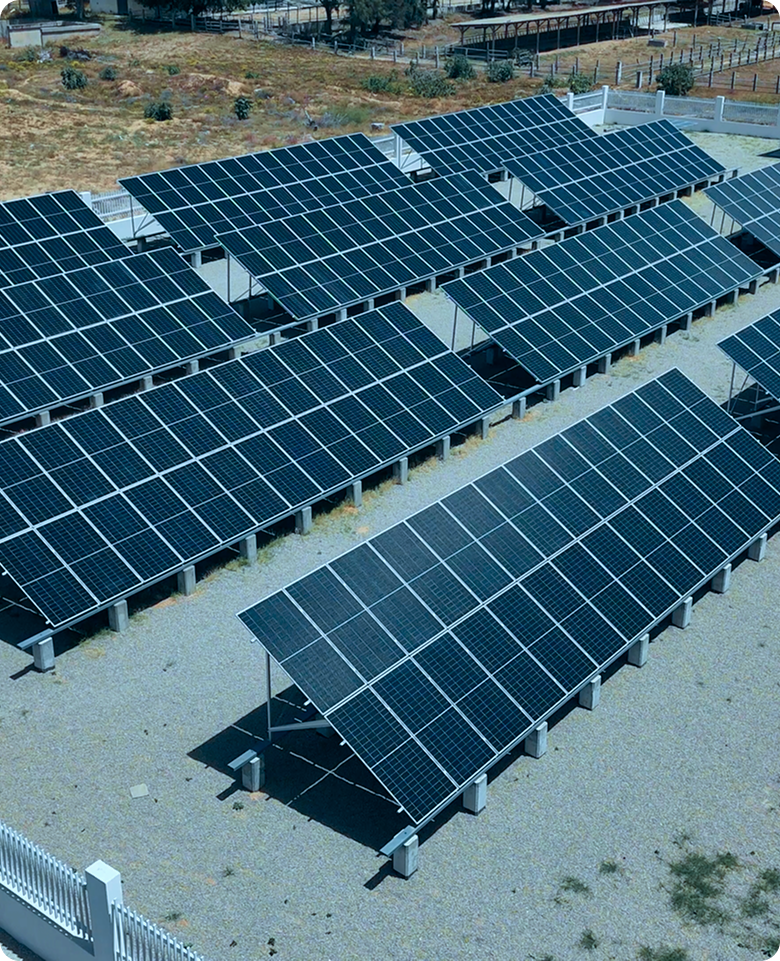
Grid-Connected Solar Power Plant at the University of Tripoli
As Libya moves towards a more sustainable energy future, solar power has emerged as a key solution. In line with this vision, REAOL is proud to highlight the maintenance and installation of the grid-connected solar power system at the University of Tripoli. This project represents a significant step toward environmental sustainability and reducing energy costs.Project Objectives:
Through this project, the Renewable Energy Authority aims to achieve several main objectives, including:
1- Conducting a detailed study of the university's electrical needs.
2- Designing a solar energy system that matches the university's specific needs, contributing to improved energy efficiency.
3- Promoting innovation to serve as a model in the field of renewable energy use, encouraging more institutions to follow the same approach.
Geographical Location
The project is located in a strategic site south of the University of Tripoli, with a total area of 3,118 square meters. This area provides good potential for installing solar panels due to its flat terrain, which enhances the system's efficiency.
Solar Radiation
Studies indicate that the site enjoys an average solar radiation of 4.84 kWh per square meter per day. This figure reflects the great potential for achieving sustainable energy, making the project noteworthy.
Technical Design
The station is designed using Solar Space panels with a capacity of 595 watts, adhering to international standards to ensure performance quality. The panels will be connected to a grid-tied system, facilitating the conversion of generated electricity for general use.
The solar energy project at the University of Tripoli is an important step towards achieving environmental sustainability in Libya. Through this project, the Renewable Energy Authority continues to promote solar energy as a main option to meet national energy needs. We hope this initiative inspires more institutions in Libya to move towards a more sustainable future.
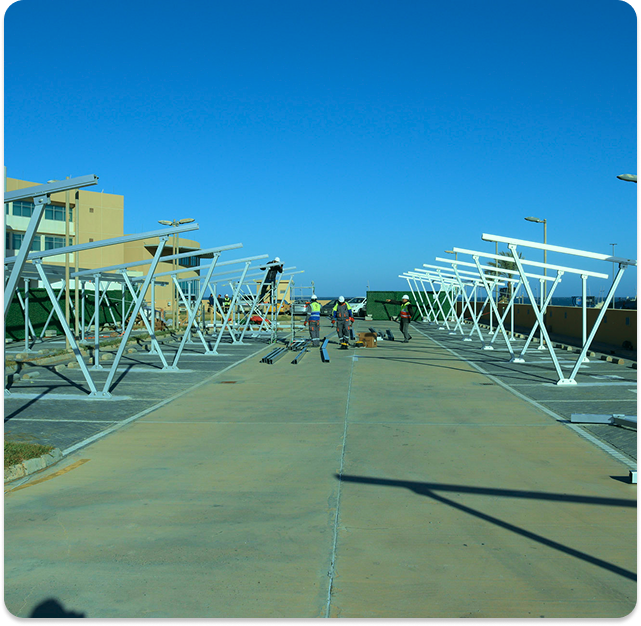
Solar Power Plant Installation Project at Corinthia Hotel Car Park
As part of the Renewable Energy Authority's efforts to follow up on the installation of a solar power plant at the Corinthia Hotel car park in Tripoli, and in coordination with TotalEnergies, a team of engineers was assigned to supervise and monitor the achievement of the desired goals. This project aims to supply the main loads of the company's offices in the hotel, in addition to exporting the surplus production to the public grid.Project Details
The total production capacity of the station is estimated at 108 kWp. The concerned team participated in all aspects of the project, including civil works such as installing the bases for the solar panels, as well as the electrical installations related to the location of the solar panels and the control room for the electrical panel of Total's offices in the hotel. All necessary measures were taken to ensure the safe implementation of the works according to international standards, as well as Total's own standards.
Technical Specifications
| Number of solar panels | 180 panels | |
| Single panel capacity | 605 Wp | |
| Production efficiency | 23% | |
| Number of inverters | 2 | |
| First inverter (INV 1) | 50 kW (AC) | |
| Second inverter (INV 2) | 36 kW (AC) |
Meteorological Station
A meteorological station was installed to measure:
- Solar radiation
- Wind speed and direction
- Temperature
- Atmospheric pressure
- Humidity
The initial operation of the station on the public electricity grid was carried out on Tuesday, January 14, 2025.
In conclusion, the installation of a solar cell station at the Corinthia Hotel is an important step towards promoting the use of renewable energy in Libya, contributing to achieving environmental sustainability and clean energy goals.
Rural Electrification Project
Although the public electricity grid covers most cities and villages in Libya, there are still small rural communities and border outposts far from distribution networks, making connection to the public grid difficult and requiring significant investment. Therefore, several technical and economic studies were conducted to determine the optimal alternative for supplying these remote areas with electricity according to best global practices. The results showed that using solar cell systems is the best option, as Libya has abundant solar energy resources, with average solar radiation ranging from 5 to 7.5 kWh per square meter per day, and more than 3,200 hours of sunshine annually.
Based on these results, the project to electrify remote areas, security gates, and pastoral wells was implemented using solar energy systems to achieve the following objectives:
Providing electricity to rural communities and security gates not connected to the public grid.
Developing specialized technical skills in the field of solar energy systems.
Establishing a scientific database in this field.
Effectively investing natural energy resources.
Exchanging knowledge and experience in renewable energy technologies.
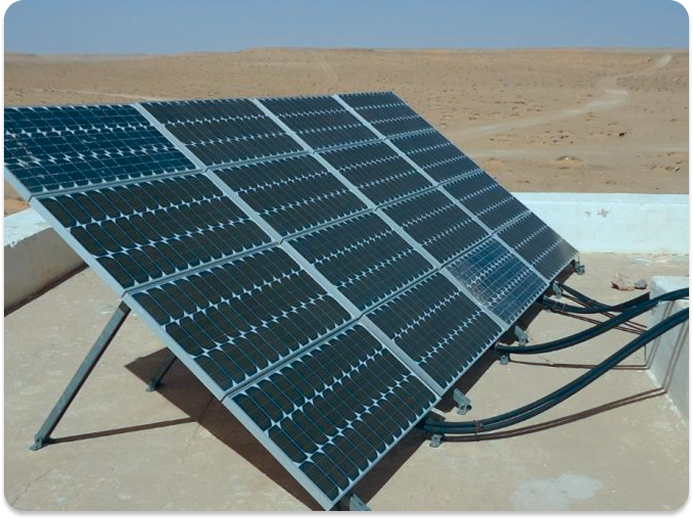
The project includes the installation of 400 solar cell systems of various capacities and uses, including systems for home use, systems for pumping water from wells, as well as street lighting poles in all regions of Libya.