National Dialogue on Transforming Libya’s Extractive Energy Sector towards Sustainable and Resilient Energy Systems
Date: Sept. 2, 2026
National Dialogue on Transforming Libya’s Extractive Energy Sector towards Sustainable and Resilient Energy Systems
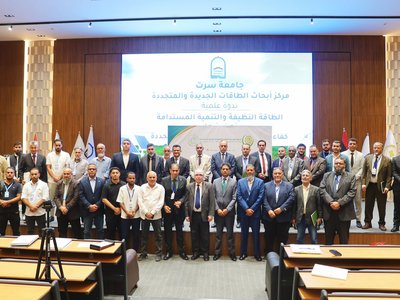
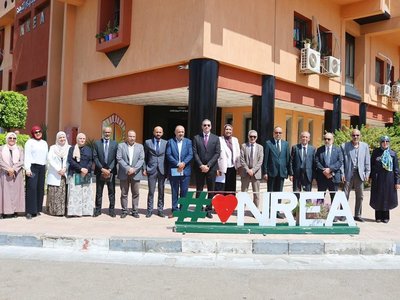
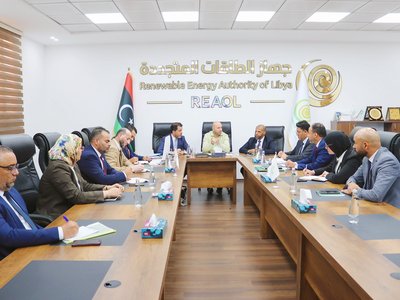
The Renewable Energy Authority, in cooperation with the Energy Division of the United Nations Economic and Social Commission for Western Asia (ESCWA), organized on Tuesday, September 1, 2026, at the Lancaster Hotel – Burj Al Hayat in Tripoli, a National Dialogue on Transforming Libya’s Extractive Energy Sector towards Sustainable and Resilient Energy Systems. The event brought together broad participation from a number of national institutions and entities, alongside a distinguished group of international experts.
The dialogue was organized as part of efforts to strengthen the national discussion on the future of Libya’s energy sector, support the transition towards diversifying the energy mix, improve energy efficiency, and capitalize on the potential of renewable energy and modern technologies. These efforts aim to contribute to building a more sustainable and resilient energy system while supporting economic diversification and sustainable development pathways in Libya.
The dialogue featured representatives from a number of national institutions and entities, including the Ministry of Technical and Vocational Education, Ministry of Industry and Minerals, National Oil Corporation, General Electricity Company of Libya, Renewable Energy Holding Company, National Mining Corporation, Brega Petroleum Marketing Company, Libyan Center for Solar Energy Research and Studies, Libyan Center for Climate Change Studies, Oil Research Center, and the National Center for Standardization and Metrology, in addition to a number of specialists and experts in the fields of energy and sustainable development.
The dialogue also featured the participation of international experts from the People’s Democratic Republic of Algeria, the Republic of Tunisia, and the Lebanese Republic. Their participation provided an opportunity to exchange knowledge and experiences and benefit from regional and international practices in the field of energy transition.
The dialogue sessions addressed a number of priority themes and issues, most notably policies, legislation, challenges, and opportunities related to the transformation of the extractive energy sector, as well as renewable energy policies, legislation, and applications, and their role in modernizing the extractive energy sector.
Participants also discussed the strategic considerations surrounding sustainable hydrogen, energy efficiency, energy audits and demand-side management, electricity interconnection, the integration of mini-grids, and digitalization. The discussions also addressed critical minerals essential to the energy transition and their role in supporting economic diversification.
The dialogue further addressed the identification of priority gaps in the transition towards sustainable and resilient energy systems, as well as ways to develop the institutional, legislative, and technical frameworks required to support a gradual transition towards a more efficient and sustainable energy system and strengthen integration among the various sectors and relevant stakeholders.
The dialogue underscored the importance of unifying national efforts and expanding coordination among institutions involved in the energy sector and related sectors. Such coordination would contribute to developing practical visions and strategic directions that support Libya’s energy transition and keep pace with regional and international developments in renewable energy, energy efficiency, sustainable hydrogen, and digitalization.
The organization of this dialogue represents an important step towards strengthening national and international partnerships, exchanging knowledge and expertise, and establishing common ground for the development of Libya’s energy policies in line with the requirements of the coming phase and the Sustainable Development Goals.